Добрый день, Коллеги. Важное сообщение, просьба принять участие. Музей Ферсмана ищет помощь для реставрационных работ в помещении. Подробности по ссылке
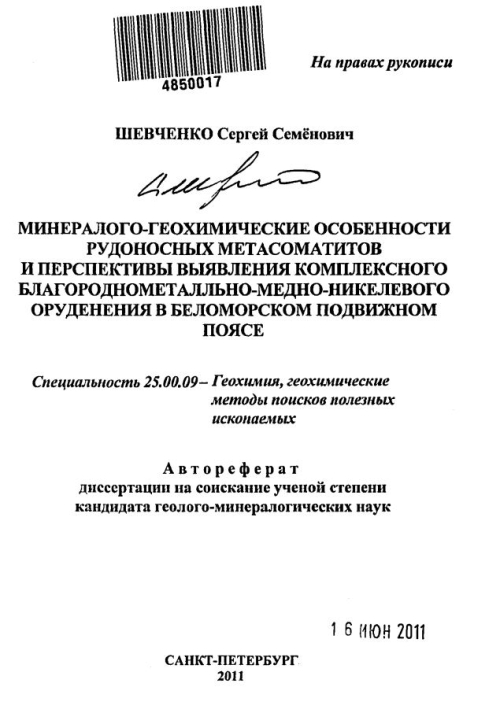
Современное состояние минеральносырьевого комплекса диктует необходимость выявления новых, нетрадиционных типов месторождений полезных ископаемых. Особое внимание привлекают руды благородных и цветных металлов, связанные с зонами метасоматических изменений. В пределах Балтийского щита месторождения такого типа известны в основном в его северной части, образуя зону субширотного простирания, в которой метасоматические процессы проявились особенно интенсивно. Среди них можно выделить месторождения Северной Швеции, Норвегии и Финляндии, где концентрирование металлов до рудного уровня связано с низко-среднетемпературными метасоматическими процессами (5th Fennoscandian exploration and ining, FEM, 2005).
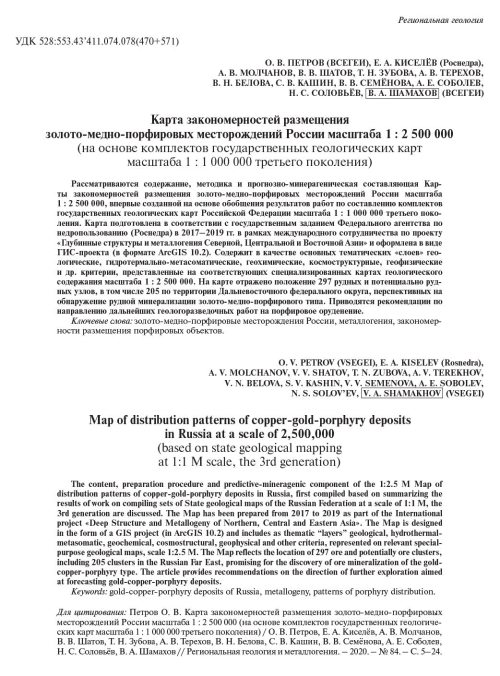
Рассматриваются содержание, методика и прогнозно-минерагеническая составляющая Карты закономерностей размещения золото-медно-порфировых месторождений России масштаба 1 : 2 500 000, впервые созданной на основе обобщения результатов работ по составлению комплектов государственных геологических карт Российской Федерации масштаба 1 : 1 000 000 третьего поколения. Карта подготовлена в соответствии с государственным заданием Федерального агентства по недропользованию (Роснедра) в 2017–2019 гг. в рамках международного сотрудничества по проекту «Глубинные структуры и металлогения Северной, Центральной и Восточной Азии» и оформлена в виде ГИС-проекта (в формате ArcGIS 10.2). Содержит в качестве основных тематических «слоев» геологические, гидротермально-метасоматические, геохимические, космоструктурные, геофизические и др. критерии, представленные на соответствующих специализированных картах геологического содержания масштаба 1 : 2 500 000. На карте отражено положение 297 рудных и потенциально рудных узлов, в том числе 205 по территории Дальневосточного федерального округа, перспективных на обнаружение рудной минерализации золото-медно-порфирового типа. Приводятся рекомендации по направлению дальнейших геологоразведочных работ на порфировое оруденение. <...>
Copper in the Age of AI analyzes the global outlook for copper supply and demand through 2040, focusing on copper’s essential role in meeting the growing requirements of electrification, digitalization, and technologies such as AI, data centers, electric vehicles, and defense. It represents the collaboration of groups across S&P Global. The analysis and metrics developed during the course of this research represent the independent analysis and views of S&P Global. The study makes no policy recommendations. <...>
На основании новых данных о возрасте и минералого-геохимических особенностях ультрамафит-мафитовых комплексов докембрийских структур южного обрамления Сибирской платформы выделяется Восточно-Сибирская металлогеническая (ЭПГ-Cu-Ni) провинция, включающая Енисейский кряж, Канский докембрийский выступ, Алхадырский террейн с прилегающими структурами Бирюсинского блока и Северное Прибайкалье (Йоко-Довыренский и другие массивы Байкало-Патомского прогиба). Установлено, что U-Pb и Ar-Ar возраст рудоносных комплексов, принадлежащих к дунит-перидотит-пироксенит-габбровой формации, отвечает в этих районах позднему рифею (728—710 млн лет). Минералого-геохимическое сходство рудоносных комплексов различных ареалов свидетельствует о генетической их общности. Исходные расплавы во всех случаях были близки к пикритам. Расчетные данные, а также обогащенность пород и руд ЭПГ указывают на высокие степени плавления мантийного источника, что согласуется с плюмовой моделью формирования рудно-магматической системы. Выделенная провинция по характеру магматизма и времени его проявления сопоставляется с Франклинской LIP на севере Канады. Она относится к числу весьма перспективных рудных районов Восточной Сибири.<...>
Изучение золотоносных и сереброносных объектов в Cu-Мо-порфировых металлогенических поясах, формировавшихся на палеоостроводужных основаниях, способствует решению таких важных научных проблем, как общая и региональная металлогения золота, пространственно-временные связи благороднометалльной минерализации с медно-порфировыми системами, ее специфические минералогические особенности.
Показатели продуктивности порфировых месторождений Cu-Au+Pd±Pt: данные из Скуриса, полуостров Халкидики, Греция, и сравнение с мировыми минерализациями
: The research interest for many authors has been focused on the origin, recovery, and exploration of critical metals, including platinum-group elements (PGEs), with the aim of finding new potential sources. Many giant porphyry Cu deposits are well known around the Pacific Rim, in the Balkan–Carpathian system, Himalayas, China, and Malaysia. However, only certain porphyry Cu-Au deposits are characterized by the presence of significant Pd and Pt contents (up to 20 ppm).
Количественная оценка минеральных ресурсов платины, палладия, золота, никеля и меди в неоткрытых месторождениях PGE в основных и ультраосновных расслоенных интрузиях в Финляндии
Most of the known platinum group element (PGE) resources in Finland are in contact- and reef-type deposits in 2.45 Ga mafic-ultramafic layered intrusions. These intrusions also have the potential to contain the majority of possibly existing, yet undiscovered, PGE resources in Finland. The undiscovered Pt, Pd, Au, Ni, and Cu resources in contact- and reef-type deposits were estimated down to one kilometre depth using the three-part quantitative assessment method.