Добрый день, Коллеги. Важное сообщение, просьба принять участие. Музей Ферсмана ищет помощь для реставрационных работ в помещении. Подробности по ссылке
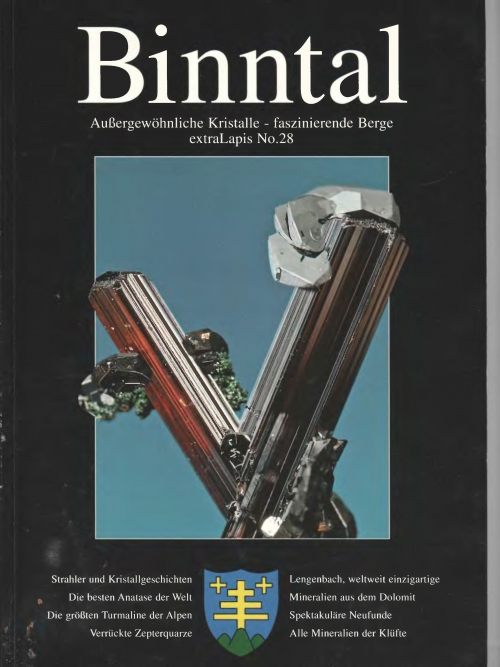
Das Binntal ist ein wahres Eldorado für Mineraliensammler und -liebhaber. Es gibt wohl kein anderes Gebiet in den Alpen, welches so vielseitige und weltweit einzigartige Vorkommen auf engstem Raum aufweist, wie dieses vom Massentourismus noch weitgehend verschonte Alpental. Hinzu kommt noch eine besonders artenreiche und üppige Flora, welche sich hier auf äußerst abwechslungsreichen Gesteinen entwickeln konnte.
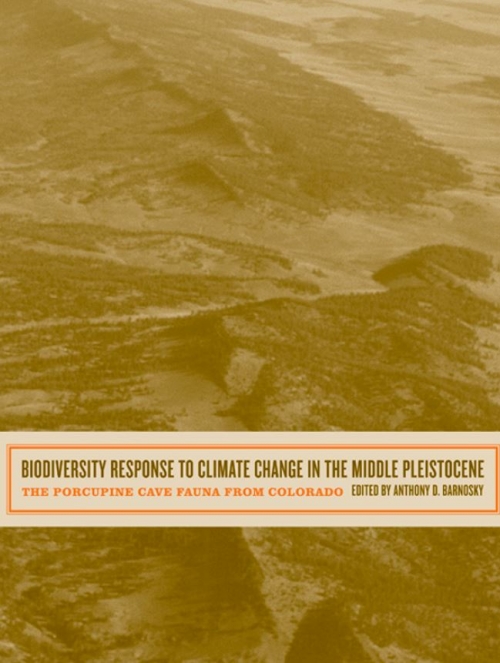
Since fossil vertebrates were first discovered at Porcupine Cave on the rim of South Park, Colorado, in 1981, the site has become the world’s most important source of information about animals that lived in the high elevations of North America in the middle part of the ice ages, between approximately one million and 600,000 years ago. Beginning in 1985, teams of scientists and volunteers from three major research institutions —the Carnegie Museum of Natural History, the Denver Museum of Nature and Science, and the University of California Museum of Paleontology—spent some 15 field seasons excavating and studying tens of thousands of fossil specimens that have opened a window onto past evolutionary and ecological adjustments. This window into the past allows us to visualize how ongoing global change could affect our living communities. This book reports the results of nearly two decades of research and has been written to appeal to three overlapping audiences
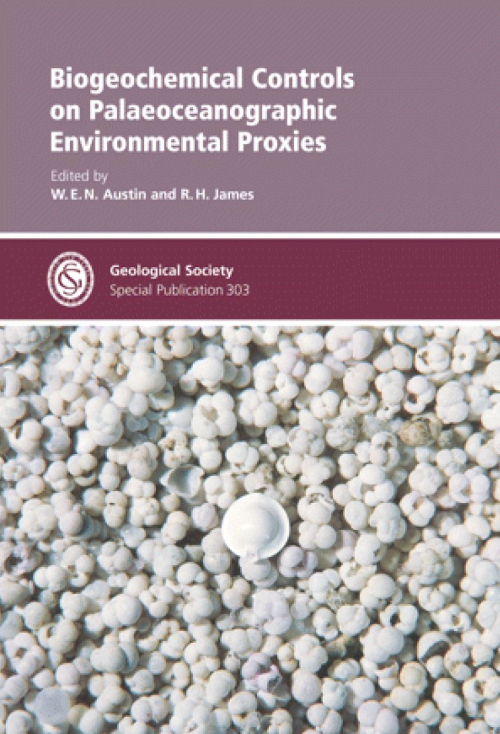
AUSTIN, W. E. N. & JAMES, R. H. Biogeochemical controls on palaeoceanographic environmental proxies: an introduction
JAMES, R. H. & AUSTIN, W. E. N. Biogeochemical controls on palaeoceanographic environmental proxies: a review
WILLIAMS, R. J. P. Some fundamental features of biomineralization
ZEEBE, R. E., BIJMA, J., HOЁ NISCH, B., SANYAL, A., SPERO, H. J. &WOLF-GLADROW, D. A. Vital effects and beyond: a modelling perspective on developing palaeoceanographic proxy relationships in foraminifera
PEARSON, P. N. & BURGESS, C. E. Foraminifer test preservation and diagenesis: comparison of high latitute Eocene sites
Since antiquity, gold has been valued for its scarcity, beauty, and resistance to corrosion. Gold is the best known of all native elements and the most likely to be found in a metallic state (Pough 1991). It is the universal standard of value and the common medium of exchange in world commerce (Koschmann and Bergendahl 1968). Gold is almost everywhere considered to be the symbol of everything precious and of enduring value because of the effort required to extract it from nature, and because of its scarcity relative to other metals (Petralia 1996; Merchant 1998). Gold was known and highly valued by the earliest civilizations:
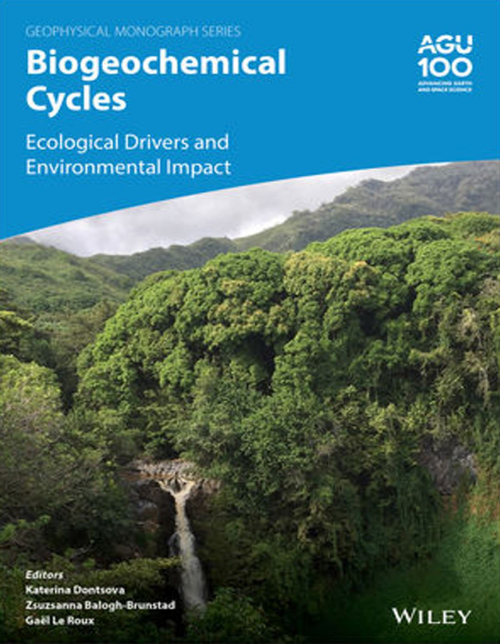
Vascular land plants have been evolving for over 425 million years. During that long period they have adapted to survive a remarkably wide range of both physical and chemical conditions.
The basic structural building block of the biomarkers is the isoprene unit (Figure 1A). The end closer to the methyl branch is called the "head/' and the other end is the "tail." Compounds formed biosynthetically from isoprene units are called "isoprenoids." Two isoprene units joined head-to-tail (with minor modifications, such as hydrogenation of double bonds) form a monoterpane (Figure IB). Two monoterpanes (four isoprene units) linked together form a diterpane, whereas six isoprene units can be joined either to form a sterane or a triterpane, depending upon how the linking is accomplished.
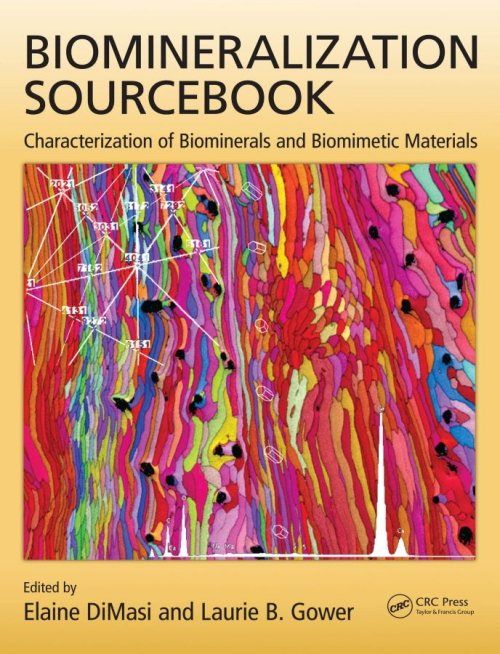
The probing questions asked in biomineralization research are inevitably at the interface between two, three, or sometimes more disciplines. Observations are made at all length scales and involve bulk structures and interphases, macromolecules, cells and materials, and solid state transformations, and at the heart of this all, biomineralization is the product of complex cellular activity. It is therefore no surprise that the development of this field has closely tracked the development of analytical technology, literally over the last 300 years. Thus, a handbook devoted to methodology in the field of biomineralization is no doubt an invaluable resource. <...>
Представлены некоторые из результатов экспериментальных исследований в области наук о жизни в лаборатории физико-химии биологических мембран биологического факультета Московского государственного университета им. М.В. Ломоносова. Материал состоит из шести основных разделов с информацией о научных результатах и дополнительного седьмого раздела. Последний, седьмой раздел содержит информацию о публикациях различных учебных и учебно-методических материалов, работ о совершенствовании университетского образования, в том числе учебников и образовательных программ по вопросам биологического и экологического образования. Этот текст частично основан на предыдущей публикации (Orlov S.N., Kotelevtsev S.V., Novikov K.N., Selishcheva A.A., Akimova O.A., Ostroumov S.A. Toxicology, biophysics. From fundamental biomedical research to applications. Some results and bibliography // Ecological Studies, Hazards, Solutions, 2013, vol.19, p. 9-28), со многими дополнениями и существенным обновлением материала.
La Société Lafarge Ciments exploite depuis 1964 de grandes carrières dans le Beaujolais méridional, sur le territoire des communes de Belmont, Charnay et Saint-Jean-des-Vignes. Les travaux d’exploitation ont mis au jour des dépôts datés de l’Hettangien au Bathonien. Parmi ceux-ci, les sédiments toarciens, aaléniens et bajociens, particulièrement fossilifères, ont très tôt attiré l’attention des chercheurs amateurs et professionnels.