Добрый день, Коллеги. Важное сообщение, просьба принять участие. Музей Ферсмана ищет помощь для реставрационных работ в помещении. Подробности по ссылке
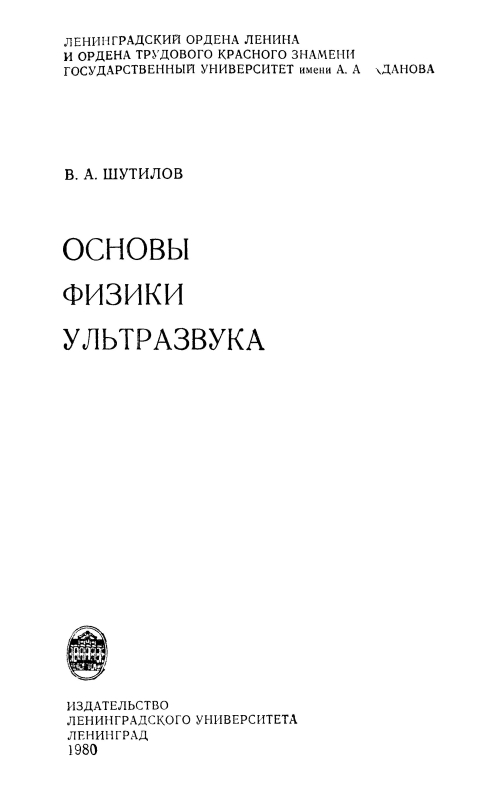
Предлагаемая книга посвящена распространению ультразвуковых волн в жидкостях, газах и твердых телах, рассматриваемых как сплошные среды с разными характеристиками упругости. В ней систематизированы вопросы, имеющие непосредственное отношение к специфике ультразвука: возможности генерирования направленных пучков плоских волн, высокой интенсивности ультразвукового излучения и т. д.
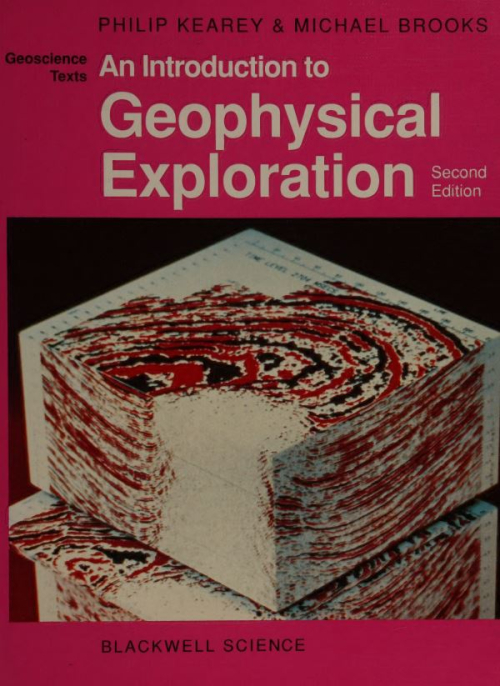
This book provides a general introduction to the most important methods of geophysical exploration. These methods represent a primary tool for investigation of the subsurface and are applicable to a very wide range of problems. Although their main application is in prospecting for natural resources the methods are also used, for example, as an aid to geological surveying, as a means of deriving information on the Earth’s internal physical properties, and in engineering or archaeological site investigations.
This book is intended as a comprehensive survey of the entire field of geophysical exploration. The author has endeavored to present the subject in broad perspective, emphasizing the relations, differences, common features, and, above all, the fundamentals of geophysical methods. The material is divided into two parts of six chapters each. The first part, written in elementary language, addresses those desiring an insight into the working principles and geological applications of geophysical methods. It is intended for individuals in executive and geologic advisory capacity and for persons not directly concerned with field or laboratory operations.
Unprecedented advances in geophysics during the 1970s and 1980s have revolutionized our concepts about the Earth. This scientific revolution is largely a consequence of the discovery of seafloor spreading and the subsequent formulation of the theory of plate tectonics. In addition, however, the exploration of the Moon and planets has had a profound impact upon geophysics, as has the development of innovative space technologies, where orbiting satellites have yielded a wealth of new and truly global geophysical data. A vital catalyst for these great advancements in knowledge has been the astonishing growth of computer technology, with the attendant development of powerful new digital techniques for collecting, processing, and analyzing massive quantities of digital data. The overall effect has been to alter foreover not only our understanding of the Earth but also the fundamental way in which we do geophysical research.
Geophysics, as its name indicates, has to do with the physics of the earth and its surrounding atmosphere. Gilbert’s discovery that the earth behaves as a great and rather irregular magnet and Newton’s theory of gravitation may be said to constitute the beginning of geophysics. Mining and the search for metals date from the earliest times, but the scientific record began with the publication in 1556 of the famous treatise De re metallica by Georgius Agricola, which for many years was the authoritative work on mining.
This book is intended as a comprehensive survey of the entire field of geophysical exploration. The author has endeavored to present the subject in broad perspective, emphasizing the relations, differences, common features, and, above all, the fundamentals of geophysical methods. The material is divided into two parts of six chapters each. The first part, written in elementary language, addresses those desiring an insight into the working principles and geological applications of geophysical methods. It is intended for individuals in executive and geologic advisory capacity and for persons not directly concerned with field or laboratory operations.
It is now 10 years since the Encyclopedic Dictionary of Exploration Geophysics was published. In this edition new terms have been added and definitions revised in order to keep up with the technological advances of this decade. The first edition appeared when exploration geophysicists were starting to cope with data processing and help was needed with the processing vocabulary.
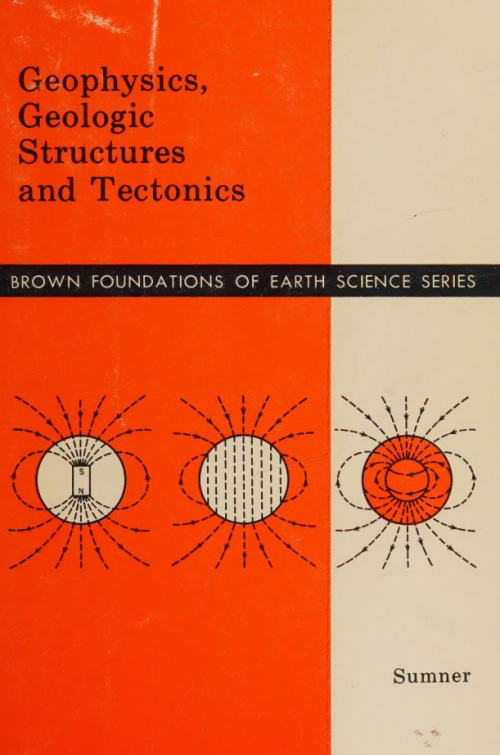
Often times a student is introduced to geophysics as a rather specialized branch of geology, employed only for prospecting or in graduate research. Geophysics courses are usually taken later in a college schedule after adequate preparation in physics and mathematics. Because it is a broad, interdisciplinary area of physical science, one can obtain a background in geophysics by taking selected studies in several different but related fields.