Добрый день, Коллеги. Важное сообщение, просьба принять участие. Музей Ферсмана ищет помощь для реставрационных работ в помещении. Подробности по ссылке
В конце XX в. и начале XXI в. охрана окружающей среды стала одной из острых, глобальных проблем современности. Охрана окружающей среды, в том числе и литосферы, означает систему государственных и общественных мероприятий, обеспечивающих сохранение природной среды, пригодной для жизнедеятельности нынещнего и будущих поколений [79].
Meteorological effects on seasonal displacements of the Åknes rockslide, western Norway Geotechnical characterization of a landslide in a Blue Clay slope Rock avalanches and other landslides in the central Southern Alps of New Zealand: a regional study considering possible climate change impacts Mechanism on apparent dip sliding of oblique inclined bedding rockslide at Jiweishan, Chongqing, China FLaIR and SUSHI: two mathematical models for early warning of landslides induced by rainfall Real-time slope water table forecasting by multi-tank model combined with dual ensemble Kalman filter Emergency response to the Tangjiashan landslide-dammed lake resulting from the 2008 Wenchuan Earthquake, China Massive landslide triggered by 2008 Iwate–Miyagi inland earthquake in the Aratozawa Dam area, Tohoku, Japan
More landslides can be expected as climate change exacerbates rainfall intensity. The long-term trend of the last 40 years has seen the number of major recorded extreme weather events almost double, notably floods, storms, landslides, and wildfires. Landslides are a serious geological hazard. Among the host of natural triggers are intense rainfall, flooding, earthquakes or volcanic eruption, and coastal erosion caused by storms that are all too often tied to the El Niсo phenomenon.
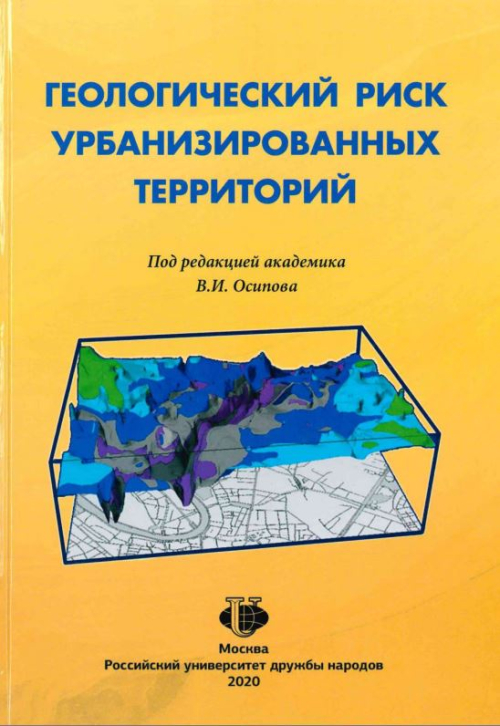
Монография представляет собой обобщение результатов исследований в области оценки риска опасных природных процессов в пределах городских и техногенно-урбанизированных территорий. На примере столичного мегаполиса г. Москвы и Соликамско-Березниковской градопромышленной агломерации Пермского края разработана методология оценки опасности и риска отдельных экзогенных процессов, а также интегральной оценки и картографирования геологического риска городов как результата наложения характеристик уязвимости инфраструктуры и природных опасностей. Наибольшее внимание уделено оползневым и карстово-суффозионным процессам, имеющим широкое распространение в платформенных условиях Европейской части России и часто приводящим к катастрофическим последствиям на городских территориях. Издание предназначено для широкого круга специалистов в области геоэкологии, инженерной геологии и урбанистики.
Understanding the Basics of Landslides and Their Causative Factors Navigating Hydrological Factors in Understanding and Mitigating Landslide Hazards in the Indian Himalayas: A Short Review Amulya Ratna Roul, Ajit Kumar Behera, Rudra Mohan Pradhan, and Sarada Prasad Pradhan Geological and Microstructural Controls on a Landslide in Ghat Region Along NH-09, Kumaun Himalaya Piyush Kumar Singh and Sarada Prasad Pradhan Rainfall Induced Landslides in Bangapani Tehsil of Pithoragarh District, Kumaun Himalaya, India Rahul Negi, Pooja Saini, and R. A. Singh A Comparative Analysis of Landslide Characteristics of the Himalayan and Western Ghat Mountain Belts N. K. Rai, P. K. Singh, Ravi Shankar, and Digvijay Singh
Part I Landslide Interactions with the Built Environment Session Introduction—Landslide Interaction with the Built Environment M.G. Winter, T.A. Dijkstra, and J. Wasowski Landslide Risk Assessment for the Built Environment in Sub-Saharan Africa
Peter Redshaw, Tom Dijkstra, Matthew Free, Colm Jordan, Anna Morley, and Stuart Fraser Rainfall-Induced Debris Flow Risk Reduction: A Strategic Approach Mike G. Winter RUPOK: An Online Landslide Risk Tool for Road Networks Michal Bíl, Richard Andrášik, Jan Kubeček, Zuzana Křivánková, and Rostislav Vodák The Impact (Blight) on House Value Caused by Urban Landslides in England and Wales William Disberry, Andy Gibson, Rob Inkpen, Malcolm Whitworth, Claire Dashwood, and Mike Winter Landslide Monitoring and Counteraction Technologies in Polish Lignite Opencast Mines
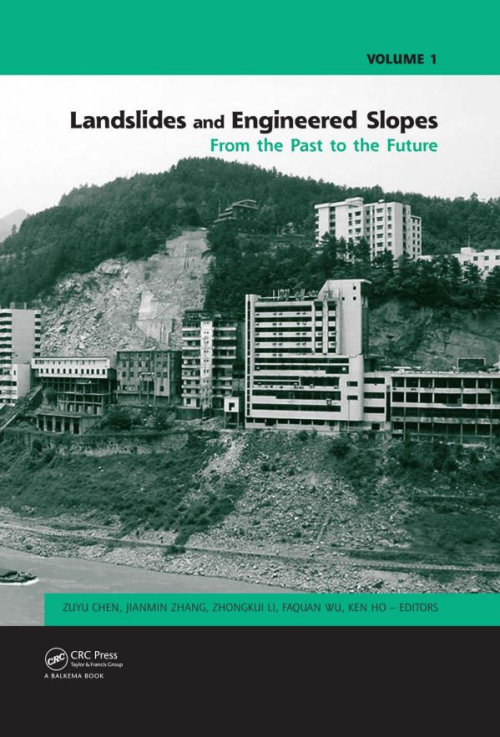
The city of Xi’an, China is privileged to have the honor of hosting the 10th International Symposium on Landslides and Engineered Slopes, following its predecessors: Rio de Janeiro, Brazil, 2004; Cardiff, U.K., 2000; Trondheim, Norway, 1996; Christchurch, New Zealand, 1992; Lausanne, Switzerland, 1988; Toronto, Canada, 1984; New Delhi, India, 1980; Tokyo, Japan, 1977; and Kyoto, Japan, 1972.
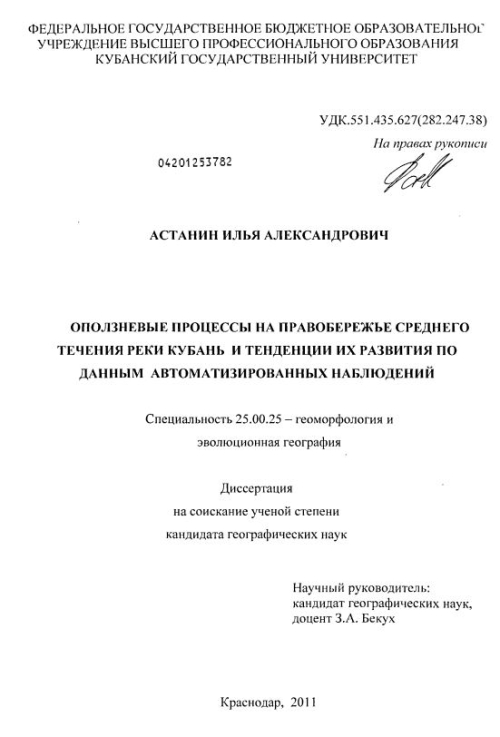
На территории Краснодарского края высокая степень пораженности оползневыми процессами наблюдается вдоль уступов высоких террас крупных рек, одной из которых является крупнейшая водная артерия края - река Кубань. По ее долине со времен освоения Кавказа были заложены многочисленные населенные пункты, переросшие в города, имеющие в настоящее время важное народно хозяйственное значение. Большинство из оползней, отмечаемых в среднем течении реки, развиты в пределах населенных пунктов, в условиях повышенной техногенной нагрузки.
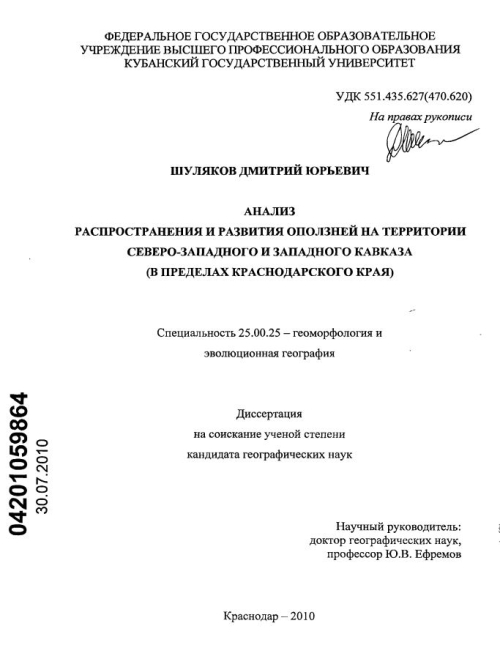
Краснодарский край является уникальным регионом по своеобразию географического положения. Близость Черного и Азовского морей, мягкий умеренный климат, разнообразие ландшафтов, растительности и животного мира, а также наличие развитой инфраструктуры и транспортной сети, определяет роль края как крупнейшего курортного и туристического региона Российской Федерации.
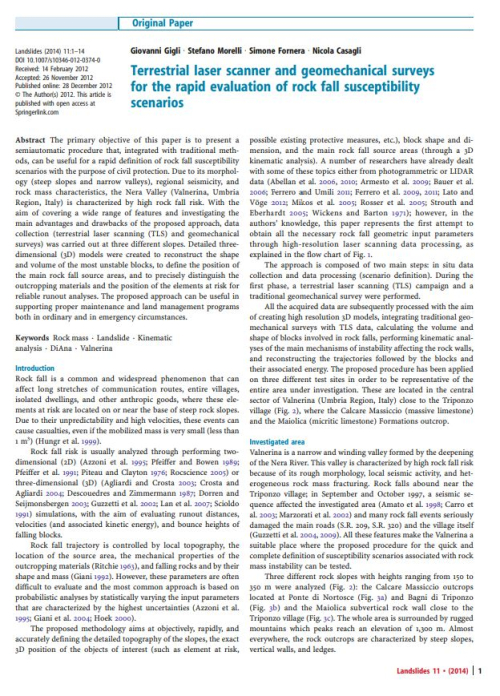
Terrestrial laser scanner and geomechanical surveys for the rapid evaluation of rock fall susceptibility scenarios Application of infrared thermography for mapping open fractures in deep-seated rockslides and unstable cliffs 2D viscoplastic finite element modelling of slow landslides: the Portalet case study (Spain) Mechanisms of failure on terraced slopes: the Valtellina case (northern Italy) Analysis of a progressive slope failure in the Xiangjiaba reservoir area, Southwest China Hummocks: how they form and how they evolve in rockslide-debris avalanches Reinforced concrete shafts for the structural mitigation of large deep-seated landslides: an experience from the Macesnik and the Slano blato landslides (Slovenia) Deriving landslide dam geometry from remote sensing images for the rapid assessment of critical parameters related to dam-breach hazards