Добрый день, Коллеги. Важное сообщение, просьба принять участие. Музей Ферсмана ищет помощь для реставрационных работ в помещении. Подробности по ссылке
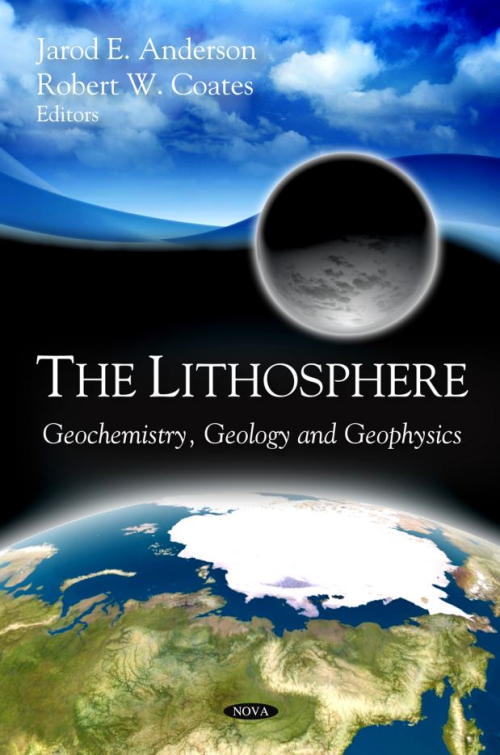
The lithosphere is the outer solid part of the earth, including the crust and uppermost mantle. The lithosphere is about 100 km thick, although its thickness is age dependent (older lithosphere is thicker). The lithosphere below the crust is brittle enough at some locations to produce earthquakes by faulting, such as within a subducted oceanic plate. This new book presents leading research in the field from around the globe. Some physical problems related to modeling the conditions of the formation and evolution of the lithosphere are discussed. It is shown that if we take into account both the effects of thermal expansion and compressibility we could receive results with no change or even an increase of density under the P-T conditions within the lithosphere.
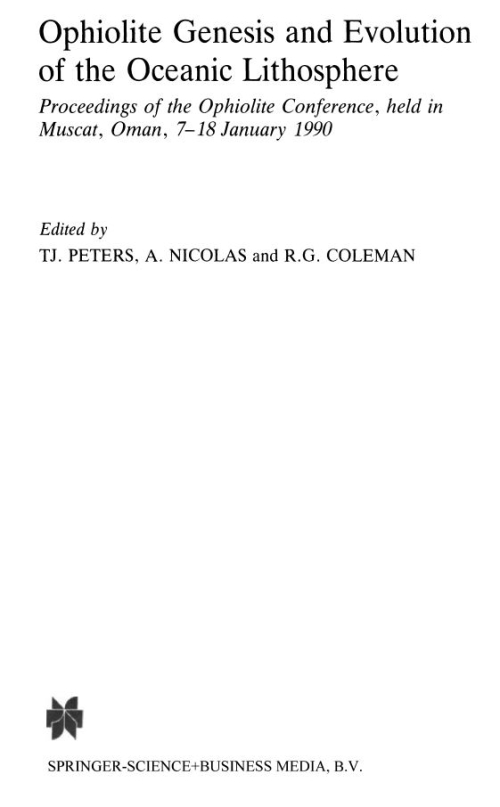
Introduction Гу. Peters, A. Nicolas and R.G. Coleman PART I: PROCESSES AT SPREADING CENTERS A) Crust Ridge Crest Magma Chambers: A Review of Results from Marine Seismic Experiments at the East Pacific Rise Detrick, R.S. Accommodation Zones and Transfer Faults: Integral Components of Mid-Atlantic Ridge Extensional Systems Karson, J.A. Rooting of the Sheeted Dike Complex in the Oman Ophiolite Nicolas, A. and Boudier, F. Diabase Dikes Emplacement in the Oman Ophiolite: A Magnetic Fabric Study with Reference to Geochemistry Rochette, P., Jenatton, L., Dupuy, C., Boudier, F. and Reuber, I.
Introduction: Precambrian –Palaeozoic history and framework
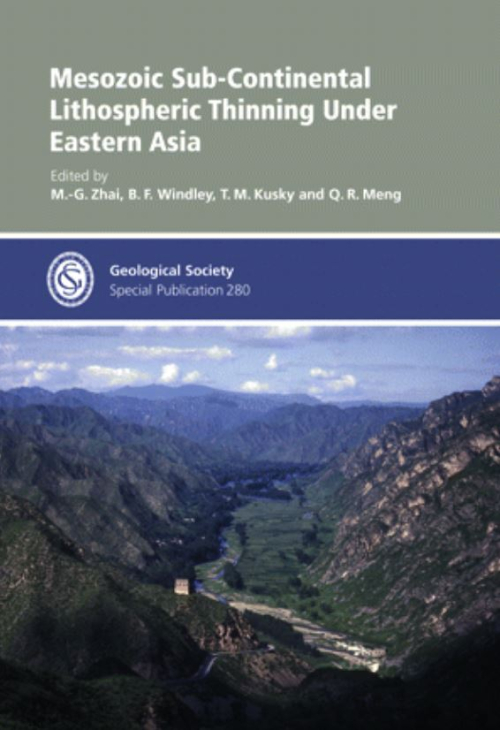
KUSKY, T. M., WINDLEY, B. F. & ZHAI, M.-G. Tectonic evolution of the North China Block: from orogen to craton to orogen Magmatism and geochemistry
ZHANG, H.-F. Temporal and spatial distribution of Mesozoic mafic magmatism in the North China Craton and implications for secular lithospheric evolution HUANG, F., LI, S.-G. & YANG, W. Contributions of the lower crust to Mesozoic mantle-derived mafic rocks from the North China Craton: implications for lithospheric thinning FAN, W.-M., GUO, F., WANG, Y.-J. & ZHANG, H.-F. Late Mesozoic mafic magmatism from the North China Block: constraints on chemical and isotopic heterogeneity of the subcontinental lithospheric mantle
Проблемы поиска и оценки коренных алмазоносных месторождений за последние два десятилетия приобрели особую актуальность в алмазодобывающей индустрии. За этот период значительно сократилось количество обнаруженных алмазоносных кимберлитовых тел, что наводит на мысль о необходимости пересмотра и совершенствования существующих методов и подходов их поиска. Для разработки более эффективных методов поиска и оценки месторождений алмаза важно понимать процессы, при котором образовались не только эти месторождения, но и сами алмазы.
Экспериментальное моделирование процессов фазообразования в зонах субдукции и в субконтинентальной литосфере при высоких P,T-параметрах является актуальным направлением в минералогии, петрологии и геохимии мантии Земли. По современным представлениям, реакции декарбонатизации являются важным источником флюида в мантии. При декарбонатизации помимо CO2-флюида образуются различные силикаты (Newton, Sharp, 1975; Wyllie, 1979; Eggler, 1978; Wyllie et al., 1983; Luth, 1995; Koziol, Newton, 1998; Knoche et al., 1999; Pal’yanov et al., 2005), среди которых особую роль играют гранаты.
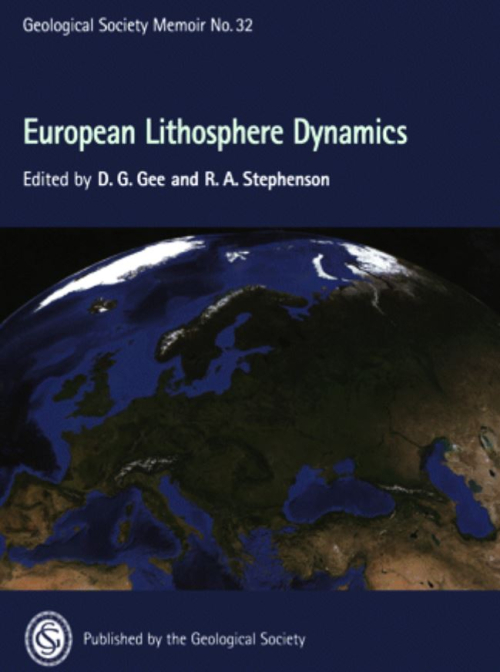
Gee, D. G. & Stephenson, R. A. The European lithosphere: an introduction Artemieva, I. M, Thybo, H. & Kaban, M. K. Deep Europe today: geophysical synthesis of the upper mantle structure and lithospheric processes over 3.5 Ga Ziegler, P. A. & Dezes, P. Crustal evolution of Western and Central Europe Stampfli, G. M. & Kozur, H. W. Europe from the Variscan to the Alpine cycles Cocks, L. R. M. & Torsvik, T. H. European geography in a global context from the Vendian to the end of the Palaeozoic Europe: Alpine to Present
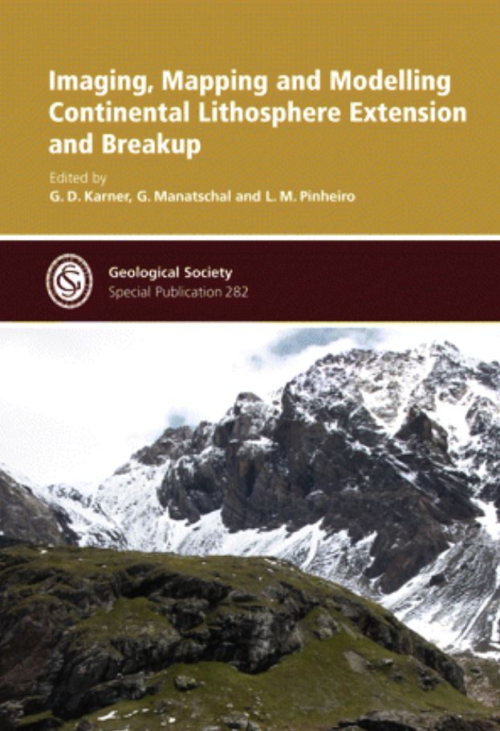
KARNER, G. D., MANATSCHAL, G. & PINHEIRO, L. M. Imaging, mapping and modelling continental lithosphere extension and breakup: an introduction
The Iberia-Newfoundland continental extensional system (geological and geophysical constraints) TUCHOLKE, B. E., SAWYER, D. S. & SIBUET, J.-C. Breakup of the Newfoundland-Iberia rift HOPPER, J. R., Funck, T. & TUCHOLKE, B. E. Structure of the Flemish Cap margin, Newfoundland: insights into mantle and crustal processes during continental breakup SIBUET, J.-C., Srivastava, S. P., Enachescu, M. & KARNER, G. D. Early Cretaceous motion of Flemish Cap with respect to North America: implications on the formation of Orphan Basin and SE Flemish Cap-Galicia Bank conjugate margins RESTON, T. J. The formation of non-volcanic rifted margins by the progressive extension of the lithosphere: the example of the West Iberian margin
The large scale structure of the earth is caused by geodynamic processes which are explained using energetic, kinematic and dynamic descriptions. While “geodynamic processes” are understood to include a large variety of processes and the term is used quite loosely, the methods of their description involve well defined fields. Energetic descriptions are involved with distribution of energy in our planet, typically expressed in terms of heat and temperature. Kinematic descriptions describe movements using velocities, strains and strain rates. Dynamic descriptions indicate how stresses and forces behave.
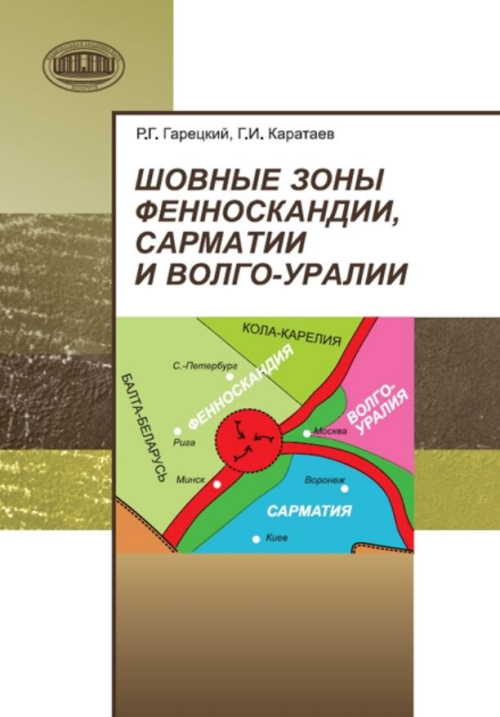
На основании комплексной геологической интерпретации геофизических полей с применением методики физико-геологического моделирования разреза изучено глубинное строение и вещественные неоднородности литосферы и астеносферы линейных межсегментных коллизионных зон (Центральнобелорусской, Рязано-Саратовской и Центральнорусской) конвергенции Фенноскандинавского, Сарматского и Волго-Уральского сегментов, образующих Восточно-Европейский кратон, и выделен новый тектонический элемент – Слободский тектоно-геодинамическтий узел их тройственного сочленения, в котором веерообразно сходятся магнитные и гравитационные аномалии, ранние авлакогены и Осницко-Микашевичский и Серпуховский вулкано-плутонические пояса.
В монографии представлены результаты изучения континентальной литосферы российской части Северной Европы. Наиболее детальные комплексные геолого-геофизические исследования, заверенные сверхглубоким бурением, проведены в последние годы в Баренцевом Евро-Арктическом регионе.